




Moderator: Ladies and Gentlemen, Good Day and Welcome to the Hero MotoCorp Limited Q2 FY ‘19 Earnings Conference Call hosted by ICICI Securities Limited. As a reminder, all participant lines will be in the listen-only mode, and there will be an opportunity for you to ask questions after the presentation concludes. Should you need assistance during the conference call, please signal an operator by pressing ‘*’ then ‘0’ on your touchtone phone. Please note that this conference is being recorded. I now hand the conference over to Mr. Nishant Vass from ICICI Securities Limited. Thank you and over to you, Sir.
Nishant Vass: Thanks, Rio. Good Day everyone and thanks for joining us today for this Earnings Call. From the management side, we are represented by Mr. Niranjan Gupta – Chief Financial Officer; Mr. Sanjay Bhan – Head of Sales and After Sales; Mr. Surender Chhabra, Vice President, Corporate Finance; and Mr. Umang Khurana, Head, Investor Relations. Now, I would like to hand over the call to the management for their initial remarks. Over to you, Sir.
Niranjan Gupta: Welcome to this Hero MotoCorp Earnings Call. You would have seen the results which we just published. The key points there are our volumes have grown by 5.5% for the quarter. Within that, market share for Deluxe segment has improved year-on-year, and overall market share in the motorcycles has been maintained. Our revenue has grown 8.6%, and within this, parts business has grown 24%. EBITDA margin is at 15.2% while dropping sequentially 40 basis points, but displays a resilience of our portfolio and also our ability to navigate through cost and other headwinds given our strong brands in the portfolio. Our profit after tax at ₹976 crores is up compared to ₹909 crores for Q1 sequentially, so with this we open the call for questions.
Moderator: Thank you very much. We will now begin the question and answer session. We have the first question from the line of Kapil Singh from Nomura Securities. Please go ahead.
Kapil Singh: Sir, firstly on demand side there have been some cost increases because of insurance, so just wanted to check, in light of that, does your full-year industry growth outlook of double-digit remain intact? Also if you can share some color on festive demand for first few days, how does it compare on a YOY basis or like to like period growth? Second question is on the other expenditure, we have seen a significant increase on a QOQ basis, so some color on what exactly has happened there and how do you expect this to shape up?
Niranjan Gupta: Let me start and then I will hand it over to Sanjay. On other expenses, you should look at it on half yearly basis and not on a quarter-on-quarter basis. In Quarter-1 call also we had said that when you had asked about other expenses are lower and we had talked about phasing. So, as you see in Quarter-2, the expenditures are phased higher, and therefore, if you look at it on half year basis, there is not so much of a difference as far as percentage of revenue is concerned. From the demand side and all that sort of stuff, let me hand it over to Sanjay to answer those.
Sanjay Bhan: Thanks, Kapil. Yes, I guess we all know about what is happening right now. There has been this impact from insurance side. It has softened the demand a little, but I think specific to your question in terms of whether our annual outlook will stand changed etc., no, I do not think we will take a short-term view of these things. Clearly, there are these kind of hiccups and setbacks that happen every once in a while, so I guess as leaders we need to also understand that the context of these setbacks is more temporary in nature than permanent. So while there is a bit of softening on demand side which is more flattish than growth at this stage, we do expect things to turnaround and move forward, and we are expecting, like we have said earlier, still hopeful for 8% to 10% growth in the festive season.
Moderator: Thank you. The next question is from the line of Raghu Nandan from Emkay Global. Please go ahead.
Raghu Nandan: Thank you sir, for the opportunity. Sir, just wanted to understand that, firstly on the cost side commodity inflation, adverse currency, and also increasing competition, so have we been limited in terms of our ability to take price hikes? Also, just wanted to understand in the coming quarter what kind of margin impact is expected, that is the first question? Secondly, Sir on the working capital side, there has been an increase in debtor days, so just wanted to know your thoughts, is it mainly because of the festive season?
Niranjan Gupta: Thanks for the question. As far as the cost and currency, commodity, there are a lot of questions loaded into one. What I would like to answer is first of all is that no one can forecast what the commodity or currency will be tomorrow, we have been maintaining that. What we need to see is that as far as past is concerned the last two quarters as we have seen, costs have been going up. We have been managing it judiciously through various things. We have been taking price increases as appropriate plus we have also been doing our cost saving programs and we have been growing volume in order to get operating leverage as well. These are the ways in which we have been navigating our margins, and therefore, that is the way that we see us moving forward. Whatever price increases we have been taking, those are being absorbed in the market, but obviously we do very sensible increases from time to time, so that is what I would say on the
margin part. We cannot give a short-term outlook on what will happen to margin etc., etc. Our long-term guidelines will remain that our decisions are guided by the tramline of 14% to 16% margins and that helps us in terms of navigating through profitable growth for our decision. As far as working capital is concerned, it is seasonal, you are absolutely right because as the stocks move up in the festive season ahead of the demand, therefore, we need to finance a bit and therefore the debtor days go up and that essentially is just a seasonal thing and not any underlying change in the nature of our working capital.
Raghu Nandan: Sir, just a clarification, based on the commodity and currency movement last two to three months, do you think that whatever price hikes have been taken are enough to absorb commodity costs or would more be required in the next two to three months. I mean, would you be taking more price hikes, say in January?
Niranjan Gupta: All the price hikes will depend on how the commodities pan out in the future. You have already seen the price hike that we took in October first week, and basically, it has been with lag of a quarter, but with a lag of the quarter we have been able to cover our cost increases. Moving
forward depending on how the commodities pan out, we will have to take decisions accordingly.
Moderator: Thank you. The next question is from the line of Ashish Nigam from Axis Capital. Please go ahead.
Ashish Nigam: Sir, couple of questions on the financing side, if you can just remind us again what percentage of our volumes are financed and within that how much by NBFCs, how much by Hero FinCorp etc.?
Surendar Chhabra: Overall financing in the market for Hero MotoCorp is 36.5% out of which 11% is from Hero FinCorp.
Ashish Nigam: Sorry, I missed the first number, what percentage is financed?
Surendar Chhabra: 36.5%, overall finances for Hero MotoCorp and 11% from Hero FinCorp.
Ashish Nigam: The remaining also are mainly NBFCs?
Surender Chhabra: Mainly banks.
Ashish Nigam: NBFCs have been talking a lot about the margin pressures and liquidity issues, are we seeing that on the ground, has that led to any softness in demand?
Niranjan Gupta: On the NBFC part of is your question related to Hero FinCorp or question is related to their ability to finance two wheelers?
Ashish Nigam: Their ability to finance two wheelers, NBFCs besides Hero FinCorp.
Niranjan Gupta: None, we have not seen any impact on that in terms of financing penetration.
Ashish Nigam: In light of this, what is the plan now for Hero FinCorp, we have 41% stake, now what is this ₹250 crores investment and how has that changed our ownership?
Niranjan Gupta: This was a rights issue, so therefore everyone subscribed in equal measure. Our stake has just mathematically gone up by 10 basis points, which is not meaningful in anyway because everyone subscribed, so the stake broadly remains the same.
Ashish Nigam: The plans of this 11% of our sales being in Hero FinCorp is there any plan for listing or something that you can share?
Niranjan Gupta: No, it is difficult to give a forecast on that. All we can say is that Hero FinCorp continues to grow not just from two wheeler, but also overall as a company in terms of their loan book size and also while the NBFCs are impacted, as you yourself mentioned, on liquidity etc., Hero
FinCorp has been served well because of this rights issue, so they have enough liquidity to fund their growth as of now.
Moderator: Thank you. The next question is from the line of Karthik Chellappa from Buena Vista Fund Management. Please go ahead.
Karthik Chellappa: Sir, my first question is on our medium-term capacity expansion plan, so as I understand it with the Andhra plant coming online the first phase sometime let us say towards the end of 2019, now capacity goes up to almost about 11 million units, given that the industry itself is set to see two important events, one is the ABS, CBS coming up in 2019 and the BS VI in 2020, are there any plan to either push back those CAPEX in view of how the demand will play out beyond FY ‘19?
Niranjan Gupta: First of all as Sanjay pointed out, we still see demand growing at 8% to 10%, because the macro fundamentals of Indian economy in general and two wheelers of auto sector in particular still remain intact. It is for players like ourselves and others to navigate through this headwinds appropriately, so that is one. Second thing is in terms of the capacity expansion also basically displays our confidence in our demand projection. Third thing is with Andhra, the capacity does not go up to 11 plus, it actually goes to 10 plus by end of next year although both these plants which is Andhra and Gujarat, if need be can be scaled up to actually move to 11.
Therefore, that is the plan and we feel that the plan is balanced in terms of capacity expansion and we do not see any need to push out the CAPEX. The other thing is that the underlying penetration levels, when we talked about the demand, so those are the stories. One could talk about the MSP increase, more income with the farmers, underlying growth of Indian economy at 7% plus, consumer credit, financing opportunity, under penetrations. All those are macro stories and they all remain intact despite whatever the short-term headwinds could be. So in a nutshell we still have confidence in the demand growth, and therefore, the capacity expansion will continue, so we are not going to push back any of the CAPEX.
Karthik Chellappa: Sir, my second question is earlier you had mentioned that at this point of time you are not feeling any pressure from any of the NBFCs who are actually financing two wheelers. But in case, let us say over the next month or so, if any of your main NBFCs experience any issues, would you have like a Plan B so that you do not lose out of the festive phase or festive demand?
Niranjan Gupta: We do not see that at all. If at all, we expect the financing percentages to only go up. If you study the NBFC problem that is there, it will be with the large corporate loans rather than the smaller consumer loans, so it is more about their asset liability mismatch where they have the short-term financing which they have done borrowing for and they have done a long-term lending. Now, these are not long term lending, these are just 24 months of EMI that is what they work with. The NBFC problem is of five years, seven years, 10 years lending with a one-year and two-year borrowing. Ours is a margin creating segment for them and a segment where they just need to finance for two years and we have even seen the percentages actually moving up, so we actually do not foresee any problems not even in the festive season but even for the medium-term.
Karthik Chellappa: Your new launch pipeline also would remain unaltered?
Niranjan Gupta: Absolutely unaltered.
Moderator: Thank you. The next question is from the line of Ruchit Mehta from SBI Mutual Fund. Please go ahead.
Ruchit Mehta: Sir, you said that you still have 8% to 10% full-year volume growth guidance or an outlook, but just to better understand that, as you said that there has been some flatness in demand per se and if the festive season continues to see that. Do you think that you would look at more of incentives whether there will be discounts or whether there will be promotions or schemes etc. to try and push through the volumes or would you just let market forces play out?
Niranjan Gupta: We will see how it plays out and obviously as key leaders and key players in the market, as I said we will keep balancing and keep watching this space closely. Sanjay, would you like to add anything?
Sanjay Bhan: Yes, Ruchit, thanks for the question. I think it is an interesting question, which also opens up a little bit of a window for us to explain to you exactly what is playing out in the market. Now, this whole insurance thing obviously has created a bit of dampness like I said, the first few days have been, because the question then was very specific, the first few days have been flattish and I think most of it what kind of setback or some sort of preliminary shock that increased insurance costs lead to. What I also mentioned was that we will continue to grow at a steady rate, still expect that 8% to 10% growth in the festive season, so we do not see a flattish festive season, we do see an improved festive season from here on. The issue on whether that will stay flat does not rise because we are increasingly confident that things will turn around. Based on service over the last two to three days, we have seen some clear improvement in terms of people walking in. The whole piece of this insurance being absorbed is also very important. For instance, the way we have tackled it, and I am sure that is the way most people are tackling it. It is also kind of reflecting in the financing that is happening. Obviously, there has been a slight improvement in the contribution of finance over the last five to six days. The net impact of the insurance increased to an EMI at 24 months EMI, it is about ₹200 odd on a ₹45,000 ticket size, so that is what it is, so therefore it has been taken care of adequately and we do expect to restore the confidence back in the market. The fundamental macroeconomic drivers are very, very robust and that is what all of us must understand, and we recognize that and we do believe that there will be a significant improvement as we get into the middle of the season. There you are, I think we should have a good decent season and I think in the meantime we will continue from there on.
Niranjan Gupta: To just to add to what Sanjay said, some part of these early days of the festive has also become a confusion: one is the amount of the insurance that we are talking about. The other is clarity in the market because the insurance first came was five years accidental then we represented and moved that back to one-year. Therefore, with all this clarity around whether it has settled or is there more to happen there in that field etc? As the communication is going out, people are becoming clearer and that is why the confidence is that it is just five to six days, there is still 25 to 26 days of the festive to go and it is becoming more and more clear, the customer have started to walk-in.
Ruchit Mehta: Could you just give us some update on the Scooter portfolio particularly with regard to the 125 CC products? That would be helpful.
Sanjay Bhan: In the Scooter portfolio we have talked about two of our 125 CCs getting launched in the season. We are doing this, we will see them shortly in the market. We obviously will be launching one after the other to space them out so that there is enough room and space in the market for consumers to actually experience both. Both are as per schedule and like we mentioned earlier, there is a lot of excitement in the 125 CC segment.
As you know, the Scooter market as it is, it has not been growing very well, but within that, in fact the growth in the 125 CC subsegment of the Scooter is 77% for the first half. We are gettinginto the segment which is perhaps driving whatever is happening in Scooters. The entire action is there so we too participate there and the launches are as per plan.
Ruchit Mehta: Sir, has there been no delay in the launch because I thought, my understanding was this would have been launched by now, Navaratri Festival would dictate?
Sanjay Bhan: Like I said last time around, it will be alongside or around the festive time, so it may not necessarily have been before Dussehra or whatever, but we are getting into a situation where we probably will be launching them in a phased manner over a period of 15 to 20 days starting
maybe Monday or Tuesday.
Moderator: Thank you. The next question is from the line of Aditya Makharia from Motilal Oswal Asset Management. Please go ahead.
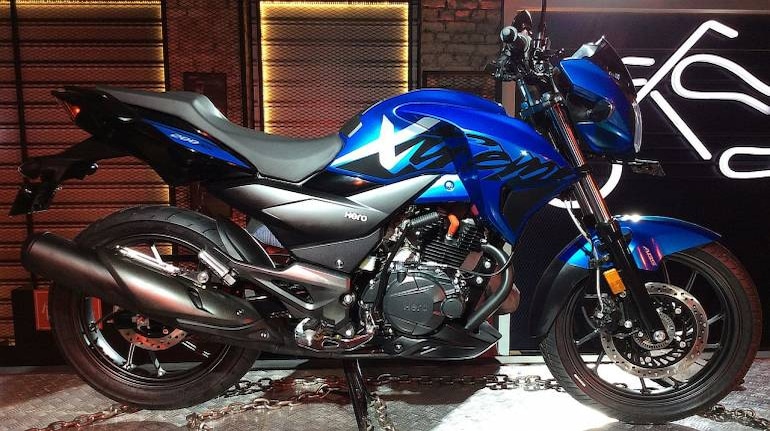
Aditya Makharia: Sir, if you could give some color on the Xtreme? How is the 200 CC bike, how are we launching it nationwide and what is the response to it? Secondly, just some color on the other income being
higher this quarter?
Niranjan Gupta: I will take the question on other income first and thereafter pass it on to Sanjay to explain on the Xtreme.
As far as other income is concerned, it is higher as you have seen. Other income comprises of also income from interest on dealers, it is on our investment portfolio, it also has interest on various deposits and also interest on the income tax deposit. This quarter has had a couple of
assessments, which got cleared, and therefore, the interest on deposits from income tax also came in and which led to an increase. A part of the rise is also attributed to that.
Sanjay Bhan: On the Xtreme I think we are extremely right now quite excited about the way it has been received by consumers. We have kind of sold about 6000 thus far. I think in a short period, we have gone national now, so the most important part is the overall acceptance of the format, the
overall acceptance of the brand, the overall communication, the positioning of the Xtreme, I think that is all coming into the right place. It is now about time the consumer will start, the enquiries or the excitement will convert themselves into sales, so we are quite hopeful and we are very excited about the prospects of Xtreme. Like we said last time, it is not just going to be left to one model in this segment to do the job, it will have lot of brothers and sisters coming along shortly. We do expect over the next three to four months, the entire premium segment portfolio for us will look perhaps the smartest of them all as I would like to put it. I think the whole excitement is coming back into the game and the fact that Xtreme had a very difficult job to do which was virtually re-launch Hero MotoCorp into the premium segment. I think it is doing so very ably. You will see some more action happening very soon.
Aditya Makharia: Lastly Sir, with Bajaj launching that triple five offer, I do not know what festive scheme they are, how are we reading that and are we reacting in anyway?
Sanjay Bhan: We said that before as well, we choose not to respond to what competition does. I think I am sure that they must have thought through whatever they are planning to do and I expect that whatever the scheme is will do well for them. We can only wish them good luck, but beyond that I really cannot say much.
Like I said, the overall mood during the festivities in the first few days like I was responding to a question earlier has been pretty lukewarm, it has been flattish at best and we have seen that trend right across all competition. If anything we are slightly better than others, so one would not be able to really comment on any specific scheme whether for competition or somebody else.
Niranjan Gupta: By the way just to add out of the three fives while not commenting specifically on any competition, but we have two fives permanently, which is five free services and five-year warranty, so probably there is one five probably we can talk about.
Moderator: Thank you. The next question is from the line of S. Natraj from Quantum Advisors. Please go ahead.
S. Natraj: In a scenario of petrol being close to ₹90 and Hero being known for its fuel efficiency of “Fill It, Shut It, Forget It” mindset of consumers, are you recalibrating your product launch in this backdrop of higher oil prices, so is their reflection of thought process on launching premium products and stuff like that, is there going to be some rethinking on that, Sir? Second on the export side compared to our aspirations we know that you are running behind, but there is some catch-up being done because of the market, what do you see over the next couple of years your
aspirations on the export side? Thank you.
Niranjan Gupta: On the first part which is petrol leading to deferral of Premium or the vehicles which are less fuel-efficient, actually if you look at it. The overall fuel consumption in a month probably on a motorcycle would be maybe Rs.1,000 or 1,500 or even 2,000. If we have to go to premium sort of stuff, and if you think given a 10% increase in petrol that is of Rs. 100, 150 or Rs. 200 in a month. Really speaking that is not a lot when you take at a monthly expenditure levels. So first of all, we do not see that impacting demand or that should impact our launches in any which way, so we will be proceeding with the launches in any case.
As far as the export is concerned, this quarter the exports growth has been good. Having said that, we will continue to scale up in the relevant markets of export, and Bangladesh is doing well for us. Equally, there is the Central American cluster which has done well for us and the growth of Q2 in exports has been close to around 25%-26%. I think it will build slowly and steadily we are building up as far as our export business is concerned.
S. Natraj: Just a follow up on that export part, can you just share the Bangladesh year-to-date volume if it is possible?
Niranjan Gupta: We do not share market wise volumes, but you can take it off-line with Umang separately if you have to.
S. Natraj: The effective tax rate guidance for the longer term?
Niranjan Gupta: We do not give tax rate guidance on a long-term, but I would say that by and large there was a big impact of the Haridwar fiscal expiry and that has already built into our tax rate.
Sanjay Bhan: Just to add to it Natraj, on the lighter side, given the fact that we are virtually not present in the premium segment, I think that should be something of concern if at all to most of the players who are pretty well entrenched. For us it is a win-win game, because we just have to keep launching our new model and get the market share, I think that is how we should see it. Beyond that really, fuel prices and the impact it has across various customer segment, I think premium consumers generally are not as influenced by such things because they obviously are a little more agnostic to such changes. What impacts is clearly other segments and if anything, we have seen historically I think you started your question with that, whenever there is a price increase in fuel, one of the biggest beneficiary is companies like Hero because obviously because of our lineage on mileage and our capabilities to deliver extremely high levels to customers, we have always
benefited from such issues. So we do see that as a positive thing in any case.
Niranjan Gupta: From the demand side, we do not see any adverse effect at all.
Moderator: Thank you. The next question is from the line of Hitesh Goel from Kotak Securities. Please go ahead.
Hitesh Goel: Sir, can you just share some demand patterns across North, West, South regions of India because I think UP was a big growth market for you guys, UP, MP, Rajasthan, and Bihar as well, can you just give us some sense on market wise or region wise demand trends?
Niranjan Gupta: We do not give geography wise or region wise demand trend, but overall let me ask Sanjay to talk about it.
Sanjay Bhan: The way you need to look at this is very simple, for markets which are underpenetrated, the growth will continue to be very robust, both in the short-term, medium-term, and in the longterm and I guess the names of market that you took are highly underpenetrated, so these markets will continue to keep rocking. I think we are extremely strong in these markets and continue to strengthen ourselves further, to that extent markets which are far more evolved and have higher levels of penetration, the growth rates would obviously comparatively, relatively speaking, be
much lower. So yes you are right, I think you answered your own question.
Hitesh Goel: Sir, just a follow up on this, basically we heard that there are lot of companies which are coming in electric bike segments especially in UP. I was surprised to hear that a place called Azamgarh also has five companies which have launched electric two wheelers there. Any plans from Hero to launch its own product in electric because it may surprise companies in a big way in the coming 12 months?
Niranjan Gupta: First of all, EV is not going to be a short-term story. EV is going to be a medium to long-term story. Second thing is we are ensuring we will not get surprised and that is why we have a twin strategy. One, we have invested in start-up called Ather, you would have seen they have launched scooters in Bangalore, we have 30% stake in that. The other is our own R&D Centre is also working on R&D. So rest assured, we will not be surprised on it, we are working on it, but equally it is not an overnight or a 12-month story, it is going to be a medium to long-term story because there is a lot of stuff on EV needs to be sorted out both from the private side,
Government side, infra side, customer side, convenience side, design side before EV can really take off.
Hitesh Goel: Sir, finally can you give me dealer inventory on overall level right now?
Niranjan Gupta: We do not give specific inventory wise but suffice it to say that we run on four to six weeks of forward demand.
Moderator: Thank you. The next question is from the line of Jatin Chavla from Credit Suisse. Please go ahead.
Jatin Chavla: Sir, first question is on could you quantify the import exposure that you have on both the direct and the indirect side, by direct I mean things that your vendors might be importing and vendors that kind of hit your P&L? Also, is it with a lag of a quarter or couple of quarters?
Niranjan Gupta: We do not give out any specific numbers on that. As far as direct is concerned, it is a small exposure because our exports and imports put together with a natural hedge and then whatever is the rest of the quantum, which remains exposed that we cover on a quarter-to-quarter basis. So that respectively is how we navigate as far as our currency is concerned.
Jatin Chavla: I think on one of the earlier calls you had called out that the indirect exposure was somewhere in the double-digits, just wanted to clarify is it still as high or have you done something to bring it down over the last couple of years?
Niranjan Gupta: What is double-digit meaning?
Jatin Chavla: The indirect exposure used to be more than 10% at least two to three years back, has the company taken any steps to bring that down over the last two to three years or is it?
Niranjan Gupta: 10% of the cost, you are saying?
Jatin Chavla: Of the cost, yes.
Niranjan Gupta: There is no bringing down that because that also depends on not just currency, but you have to look at the overall benefit of landed cost from import. From this thing vis-a-vis local supply, and really speaking in case of currency, it is not why at least what we see is to take a call on currency, and if you keep switching currencies from one part to the other and try to actually reduce exposure or try to do only based on currency that does not work. Therefore, what we do is basically we do hedging on a quarterly basis as far as our exposure is concerned, but there is no effort to bring down any kind of direct or indirect exposure purely based on currency.
Jatin Chavla: Could you quantify the total price hike that you have taken so far this financial year, cumulative?
Niranjan Gupta: We have been talking about price hikes every quarter, so I cannot remember all the numbers, but you can pick up from the previous calls, but this time also we took price hike on the ex-showroom basis of around ₹600 to ₹700 I think that is what we talked about. We had taken around ₹200 odd in the previous quarter and another ₹300 to ₹400 odd from April 1st, you can pick up from the previous calls, but those have been the order of price hikes that we have been taking.
Jatin Chavla: October was about ₹600 to ₹700?
Niranjan Gupta: Yes.
Jatin Chavla: You mentioned some one-off element on the other income side, possible to quantify that?
Niranjan Gupta: No, it is not possible to quantify, because there are very different elements into that, and therefore, we will not be able to quantify exactly the one-off elements. It does happen those interest on income tax deposits do come in several quarters, so it is not just also a one off. It is one-off in this quarter, it also was there in I think Q3 or Q4, so as and when the assessment keeps getting completed the amount accrues and that is what it is.
Moderator: Thank you. The next question is from the line of Pramod Amte from CGS CIMB. Please go ahead.
Pramod Amte: I wanted to check do you see any in terms of the demand or the sales momentum for the industry, how has been rural versus urban and in terms of slowdown which you talked, is there any distinct pattern between the rural and urban again?
Sanjay Bhan: I think what we have seen thus far it has been fairly consistent thing: you could say that rural is a little stronger and as opposed to the urban thing, but just about marginally better. What we do expect is that going forward given the MSP kind of scenario that we are getting into now, there is a clear feel that we are getting from the upcountry networks and markets that things in rural will start looking not good, but even better. That just gives us that extra confidence that things will start getting even better in rural going forward, so to that extent right now what is visible is
almost a similar situation in rural, but I think from here on things could get even stronger for rural.
Niranjan Gupta: Also let me just add on, you mentioned we said slowed down; we have not said slowed down, we are talking about the first five to six days of festive. We are talking about the long-term macroeconomic fundamentals remaining strong. We are talking about even the short-term
fundamentals remaining strong, which is the MSP, which is all the sort of stuff that is happening. The quarterly economic growth etc. is all factored in. Six days of festive really speaking, calling that a slow-down, we do not quite agree. I think as you said we still believe that 8% to 10% underlying growth momentum is possible.
Moderator: Thank you. The next question is from the line of Pranav Tendulkar from Rare Enterprises. Please go ahead.
Pranav Tendulkar: I just wanted to ask how many of your dealerships are you categorizing as winners, average performers, and below-average performers, that is one? And to improve that how frequently are you doing some initiatives like mystery shopping etc. to assess their performance and what are the solutions that you provide for dealerships to improve their performance?
Sanjay Bhan: Pranav, first of all I do not think it will be fair on our part to share the exact number of dealers not pulling their weight. But yes, I think the question is very relevant to understand as to what is the company’s thinking. On how do we really try and bring them around and improve their performance: we have an internal system just to share with you we call them “MyScore”. We track that on a regular basis, it is a balance scorecard based system wherein performance across all parameters, sales, service reporting, service satisfaction, parts business in all allied areas are factored in, including any customer complaints or any challenges around that. That gives us a residual score for each dealer and the bottom five percentile of all dealers are specially put into a dealership improvement plan for which there are various trainings etc. There are various interventions that are done from time to time, and the intent therefore is to improve them.
We are an extremely dealer-friendly company, but we try to ensure that performance does not come in the way. Therefore, we make sure that we are able to go through most of these dealers and wherever there is a need, we obviously look at options of letting such dealers go; there has been a case of that in the past.
Pranav Tendulkar: I myself have done some research on the ground and the Hero MotoCorp is actually very well known for low cost of ownership, total cost of ownership not just the initial discounts and this communication is not as effectively coming out in city dealerships that is what my observation
was. Maybe my sample was very low, as it is clear to rural dealers, are you doing anything to push this impression because these guys are the first and most authentic communicators of your product, right?
Sanjay Bhan: Just to kind of understand your question, you are saying that our rural dealers are more aware of this as opposed to the larger dealers, that is the question?
Pranav Tendulkar: No, it might be also coming out because of the dealers experience that urban a bias might be actually concerned about not total cost of ownership. Some different things, I am not clear about that, but rural dealers are quite clear about it that your total cost of ownership will be very low in Hero as compared to say Bajaj or any other competitor.
Sanjay Bhan: There has been a jury out for a long, long time and I think we always end up in these kind of chats where people end up thinking that rural customers are not probably as brand savvy as they are cost conscious as opposed to the urban customers, but like I said the jury is still out. I personally believe that rural customers are strongly brand oriented as is the urban counterpart. I do not think there is any gap in that and that is why we see the best of products are actually getting consumed in the rural market.
The point is that perhaps there is a very clear driver which is about total cost of ownership which needs to be articulated adequately in certain areas, which is a little more sharper in those maybe defined by your own survey; something like you said your limited sample size, maybe in that sample it turned out that the smaller dealers were a little more sharply talking about these things and whatever is the sales pitch eventually is also a function of what the customer really wants to know more about, is that not right. In such markets where your sample has been skewed, therefore you would not have been able to pick those markets where customer is actually concerned about total cost of ownership being as the core reason, but in terms of our pitch to all our dealers and the communication, we are very clear. First of all, I do not quite agree with the initial discounts, there are no discounts, Hero does not offer product discount, so we are very clear about focusing and that has been our pitch for a very, very long time because most other manufacturers are available at a discount versus the products that we have in the category. Therefore, if we have to fight against that and more recently in the last call I remember there was a whole bunch of talk about certain competition and a certain amount of discount which was going into maybe Rs. 8,000 plus kind of a discount, we did not of course. Today I am surprised there is no question on that, but that is the reality. In markets there are competition, which are offering a significant discount upfront.
We are still operating very successfully so, so our pitch has always been not about initial cost alone, it has been about the total experience and the total cost of ownership across dealerships, across city types, across customer demographic. May be the sampling something is one way like you look at the sample probably having skewed could be the reason that you have not picked it up.
Niranjan Gupta: Having said that I think we are happy that you are picking up this which is also one of the core messages which we also communicate and we could always look at enhancing this.
Sanjay Bhan: If you can share with us those samples maybe we need to do that.
Niranjan Gupta: And also in the market from sometime now we have moved towards rather than just the total cost of ownership but with value of ownership where they include the brand and the price and everything.
Moderator: Thank you. The next question is from the line of Pramod Kumar from Goldman Sachs. Please go ahead.
Pramod Kumar: I just want first clarification on the spare parts comment what Niranjan made at the start of the call, did I hear it right that spare parts growth was around 24%, part revenue growth this quarter, is that right?
Niranjan Gupta: Yes, Quarter-2 versus Quarter-2.
Pramod Kumar: That would put in the number of over ₹700 crores, right for the quarter?
Niranjan Gupta: ₹713 crores to be precise, I can give you the number.
Pramod Kumar: My question pertains to the second half outlook on marketing expenditure given that you guys are having some amazing launches on the Scooter and the Premium motorcycle side. Is it probably fair to expect that with the festive retail marketing as well in terms of branding and the launch expenses, the marketing intensity will be much more higher in the second half versus the first half?
Niranjan Gupta: Well, it could go up, overall we have always been around 2.5% to 3% in terms of our ad and publicity expenditure and we keep managing within that framework and we do see ourselves as managing within that framework even moving forward. Second half will be higher than first half.
Sanjay Bhan: Historically, it has been like that. The second half does see some action, particularly if your Diwali, Dussehra falls into second half which is the case this year. Last year of course, Dussehra was in the first half. There a lot of expenses got split a little there, but I guess that is traditionally the way the entire auto segment and particularly two wheelers expense is made, a lot of spending in the second half.
Pramod Kumar: Second question is on the aspirations on both the scooter and the premium motorcycle, as you can see the data on scooter market share, we have been kind of having a five-month straight decline in scooter dispatches. I guess you are probably setting the ground with very low inventory of the existing models when the new models come in which is understandable, but how would you see the market share journey for Hero from here on for the next two years. Is there any aspirational numbers because in the past you shared numbers which have not exactly materialized because 100 CC segment is not exactly doing well, but as you enter the fast-growing 125 CC segment, is there a number which you would put as to where would you like to have your market share back like we have done 20, 15, and all, now we are closer to 11, so is there a number there and similarly for premium motorcycles we used to be 12% plus in FY ‘13, we are down to 1.3%, what kind of a comeback are we looking at in both the categories?
Niranjan Gupta: I will start with just a minute on this and then hand it over to Sanjay for his answer. We do not give out a market share ambition number on any of our portfolio because it is important to do the right thing and then the market share will come along with it. Obviously, in any segment that we would play, we would play to win and to get a fair market share. As far as Scooters is concerned, you have already talked about 125 CC launches and that was the endeavour, premium would be building portfolio over three to five years and then get to a meaningful market share. What that would be, we will not be able to quantify. Let me hand it over to Sanjay to talk more about the Scooters and the premium.
Sanjay Bhan: Pramod, I think there is a very simple answer to your question, our growth or our aspiration in both these segments is going to be a function of the launches that we are going to be having in these segments. As you already perhaps know that both these segments are slated for some very major action and something that is going to happen very soon shortly in Scooters followed by some more action in the premium segment. I guess it is also very important to understand that first of all it has not been a tanking story for us in Scooters. We have actually improved our market share between Quarter-1 Quarter-2, from 12.6% we have gone to 12.9%, which is not a bad situation in a market anyway which has been having a lot of turmoil. If you would have noticed, the Scooters have not been doing as well as they have been doing historically. It is just the segment that we are not operating in within Scooters that we are not present, so we cannot really count that in. But we are getting there and that is the market that is really having fantastic growth, and hopefully, that should trigger and supplement our efforts to improve market share. Like Niranjan mentioned, we do not give an outlook on the proposed market share, but I guess you know how Hero operates and I am sure our ambitions are pretty, pretty high and pretty much in the zone and expectations that you have. Hopefully over the next two to three years in the medium term, we will be certainly be well poised to hitting those numbers both on premium as well as for scooters.
Niranjan Gupta: Also just to add on the brighter side Pramod that within a phase of six months, you are going to see three launches, one is Xtreme 200R, which has happened in premium, the two 125 CCs which are going to come. Probably in the last many quarters you would not have seen three launches of new products coming in six months, we are building a good platform from here on.
Moderator: Thank you. The next question is from the line of Sonal Gupta from UBS Securities. Please go ahead.
Sonal Gupta: Just dwelling on the same question, like you mentioned a couple of times on the call the scooter market has not been doing well, any thoughts around that, I mean especially in light of the fact that you said that urban and rural are not really very different in terms of demand trend, so could you just throw some light on what is happening in the scooter side?
Sanjay Bhan: We partly addressed this in the last quarter earnings call as well. There are multiple things that seem to be happening. One is, the base on scooters in the Q1 last year was very high because of the initial fill opportunity post the BS IV, BS III conversions, so therefore the growth there was slightly muted, but that has continued to be on a bit of a sort of a downturn I would say and I think perhaps there could be multiple reasons. We are also trying to grapple with that and a couple of things that seem to be indicative from data points, is that there has been a significant over the last three years, there has been a very high level of multiple ownerships within households that has gone up incredibly over the last three years. Perhaps that is flattening out and therefore that is not helping the scooter growth, because of scooter in a lot of cases, almost about a quarter of scooter growth was actually determined by multiple ownerships in households, so perhaps with that kind of a flattening out, it is impacting a significant amount.
The other thing that seems to be happening is a lot of action around the 125 CC, so which is the segment which is growing very fast. We mentioned this last time around that it took almost about 15 years ago or maybe close to 20 years for the motorcycles, in case of motorcycles to move to about 20% thereabout contribution from the 125 CC while as in scooters it is less than 10. So you have traction around probably power and stuff like that, maybe the current scooter customers are not as excited, they probably are seeking a little more thrill, so maybe that movement is happening, maybe multiple ownership is kind of holding it back. Hopefully, we will watch it a little more carefully. We are not concluding that the scooter completely done and out, but we will have to watch it a little more closely over the next quarter or so to be able to have a very clear picture on what exactly is going in with scooters.
Sonal Gupta: Just on the motorcycle side also, if I look at the broader trend in the industry on the 100 to 110 CC, really the demand seems to be moving more towards the entry-level motorcycles. Not just this year because of the discounting and stuff, but even if you look at like five to six year trend and the executive or the deluxe as you call it has actually been shrinking. Of course, you have not lost volumes, but other players have. So are we seeing that people are just sort of down trading in terms of or how do you see the 100 CC as a segment itself has been shrinking overall in the longer term? How do you see the trend going forward on a medium-term basis and what
does it have the implications in terms of your margin profile given if entry becomes bigger and bigger?
Sanjay Bhan: I think it is very simple, there is a pull and push story work side as well. A lot of consumers who are migrating to scooters are multiple ownership guys, who are probably picking up from Deluxe segment. I would assume one clear check for you would be that over the next quarter or so if there is an improvement in the Deluxe contribution within motorcycles, you could clearly conclude that scooter people are holding back and coming back to Deluxe motorcycles. As far as entry is concerned, there is a lot of opportunity out there. There is an full ocean of people who really want to come into motorcycles and their first stop probably would be in the entry-level bikes, and therefore, entry segment will continue to grow because of penetration. I have already answered that earlier in a very different context because there is opportunity from a penetration point of view and the first opportunity obviously goes to the entry level bike.
Niranjan Gupta: Also if you look at the growth, if you look at even full-year ’18 growth, executive grew in double digits 10% plus, premium also grew 10%. Yes, first half if you see entry has grown faster and that is also on the back of some discounting that has happened. If you look at a sustaining trend and we have mentioned about, it is a story of many Indias. You have on the entry bottom of pyramid, people lapping up probably the lower price bike getting there and then you have another middle-class which is the entire belly which actually wants to go for a better motorcycle even as their first motorcycle and of course we have great part of it and that is why that is growing and the premium is more an urban stuff where aspirational youth etc. has been driving. I think it is a story of many Indias playing out. We do not naturally see one segment getting cannibalized by another segment, so we do not see that happening.
Moderator: Thank you. The next question is from the line of Jamshed Dadbhoy from Citibank. Please go ahead.
Jamshed Dadbhoy: Just one housekeeping question, what were your spares revenue for the first half please?
Niranjan Gupta: The spares revenue for Quarter-1 was ₹602 crores and Quarter-2 was ₹713 crores.
Moderator: Thank you. The next question is from the line of Ashutosh Tiwari from Equirus. Please go ahead.
Ashutosh Tiwari: Sir, you mentioned that the financing is around 36%-37% as a whole, but how would that split between say rural and urban, will the financing be higher in the urban areas than in rural?
Surender Chhabra: Financing is always higher in urban area than rural because you have to see the financing available to the white collar consumer and that is why urban financing will always be higher.
Sanjay Bhan: In urban markets, the financing is as high as 55% to 60% than rural markets it is much better.
Niranjan Gupta: Just to add on to that, that is actually another big opportunity as far as two wheeler industry is concerned moving forward in the medium-term, because the current low level of rural financing is not going to remain low. All it means that a lot of demand is actually not getting fructified because of low level of financing and that would change with financial inclusion, that would change with finance penetration, that would change with all the smart phone penetration, bank accounts all the sort of stuff the credit inclusion, the digitalization of that. Over the medium term if you look at the next three years odd then one can see actually this finance penetration in rural increasing and that is again be a big fillip to the demand.
Ashutosh Tiwari: Because of this increase related to insurance, it is almost Rs.4,000 for entry segment, would not that impact the rural demand as there it is really cash as of now, larger portion is cash so will not that impact demand over the near term at least for next four, five, six months maybe after that maybe you will start seeing increase in the financing?
Niranjan Gupta: Actually if you see the part of finance vs. non-finance all that is combined, which is what you see as of now and we see as being displaying, we have just seen a bit of confusion around it. Yes, there is an impact on the ex-showroom price, yes that is why probably the first few days of festive have seen kind of a flattish growth. But we also see now in the last couple of days customers walking in, so actually we see that festive is big. The rest of the stuff because it is not just about an expenditure on a particular month, it is about do they have enough income and money in their wallet to actually spend.
The sales comes from there and that is impact whether it is MSP, whether it is economic growth, etc., so they have the money in the wallet that is a big thing, it is the most important thing. Thereafter, there decision to buy, yes, initially you have got confusion around insurance. Now, people are walking in, so we still feel as long as people have income part of the story is intact
then the demand will keep going.
Moderator: Thank you. The next question is from the line of Gunjan Prithyani from JP Morgan. Please go ahead.
Gunjan Prithyani: Sir, I just had two follow ups, firstly on the financing penetration which you touched upon, are you seeing some new players? In the sense are banks coming back to the segment because there was in general a big withdrawal in 2009-10 and then you have seen the captive NBFCs? Are you seeing the profile change and are you seeing banks more receptive to it and looking at this segment more seriously now?
Niranjan Gupta: I had a conversation with few of the banks on this and you are right, I mean there are more receptive towards this. I think they have increasingly seen the opportunity space of the consumer financing. So far the big banks have relied on corporate financing and the consumer financing has gone to NBFCs. Increasingly you can see that the banks are looking at this segment as a business moving forward and as banks come in, they can spread and with their scale probably even work on interest rates in the future may drop. The cost of financing that happens today in the rural area, now that is not for short-term, but I would say that if you were to ask for a five year outlook, I would say that I could see banks coming in. I could say the cost of financing coming down and see the penetration increasing. Will it happen in the next three to six months, maybe not, but medium-term, certainly yes. Sanjay?
Sanjay Bhan: Gunjan, again a very good question really because I think from the context of what actually is happening in terms of finance footprint, I think it is not just a case of more people in bigger towns buying more bikes or two wheelers or four wheelers on finance, it is also about the deeper penetration with finance company. The footprint as they call the geo limits for each of these towns is expanding rapidly, which tells you one thing that the confidence of finance companies in terms of securing their funding is increasing rapidly, the financial environment overall in the country is improving dramatically, but that might sound surprising given the recent context of how corporates have not done well in terms of their own behavior in repayment of dues. But consumers are clearly, the two wheeler consumers have really given the confidence to a lot of financers, so we see a lot of NBFCs, cooperative banks, Regional Rural Bank (RRBs) coming in, improving their footprints, increasing their geo limits. Therefore a lot of consumer confidence is increasing like Niranjan mentioned short while ago. That is another reason why we are seeing that the overall long-term view of two wheeler demand is looking pretty good because the moment financing improves and increases, it is going to only bring in more customers to the fore.
Niranjan Gupta: If I were to just quote a report of, I think it is a PwC report, the “Future of India” report where if you see, the finance access of the consumers overall, not talking about two wheelers is 35% projected to grow to almost 90% in the next 10 years. So there you are, there is enough opportunity as far as financing is concerned and we are sure at some point of time it is going to take off.
Moderator: Thank you. The next question is from the line of Nishant Vass from ICICI Securities. Please go ahead.
Nishant Vass: Sir, sorry for again asking the question on festive just because it is quite unique because the cost changes happened on insurance and there was a disruption, trying my luck: could you give a breakup between what you generally traditionally see the sales in festive during the Navratra period and say between the Diwali and Dhanteras period historically and I am coming from this fact that even if say we have probably lost a few days initially on Navratra, is it possible the consumer kind of shifts his demand cycle to say Dhanteras and Diwali and the overall volume growth comes back, as you are highlighting 8% to 10%, please your views on the same?
Sanjay Bhan: That is a nice try Nishant I must say, I think we will just go with what we mentioned to you short while ago. These are early days, extremely early days and this is not something that is happened for the first time, it keeps happening cyclically in two to three years: sometimes the Dussehra does a significant job and then Diwali is not as strong. Sometimes the start can be lukewarm or flattish like I mentioned and then there is a takeoff subsequently. All these things even themselves out because it is like this, you and I decide to buy something during a certain period and I may not buy it on a Monday or I may not want to buy it on a Wednesday, I might decide will buy it two weeks later because there is something else that has come up. I guess as long the mood and the overall larger macroeconomic factors are in place, there is a bit of dampening. We admitted to that, the fact remains that there has been a major setback on account of the insurance play in the month of September. Now, it has kind of eased up, by now it has been a month since the thing happened and as Niranjan mentioned earlier, it is not only that increase in the insurance which happened in the month of September or 1st September, it is also the confusion created, so I am not going to comment on that. But there was a huge confusion on five years versus eventually we had to fight it out and get down to one year, so that confusion has led to a little bit of customer unease. I would say it is kind of now easing out itself. We are seeing some serious improvement over the last two to three days, so without really sharing the number which may not be also right to do. We do expect that there is going to be a significant improvement from the way things are now to how we will turn out to be at the end of this year.
Moderator: Thank you. The next question is from the line of Jinesh Gandhi from Motilal Oswal Securities. Please go ahead.
Jinesh Gandhi: Sir, my question pertains to the 125 CC scooter launch, so you are indicating will be launching around first week of November, is that correct?
Sanjay Bhan: No, what I mentioned is, we may start off with one market right now because what happens in this festive time, we do not want to really risk the fact that we supply quantities and there are thin quantities and people who really wanted then we are not able to satisfy those customers, they will be disappointed, dealers will be enraged, we will be disappointed. We would rather go and try and fill up a market, because the ramp up takes time and we would accordingly fill up the market in the pipeline of one particular cluster of market and then over a period of 15 to 20 days open up into other markets and then go with a bang, that is how plan is right now. We are starting off with one cluster and fill that up adequately, that they are able to cater to all the festive demand for that scooter and then open up rest of the country in one shot.
Jinesh Gandhi: Okay and that will happen from coming Monday?
Sanjay Bhan: This would happen between coming Monday and Tuesday, we would start off with one market and then subsequently go ahead out to rest of the country over the next three weeks.
Jinesh Gandhi: The second 125 CC scooter would be around Jan-Feb?
Sanjay Bhan: That would be maybe about a month later or something like that, it is really up to us, but to be very honest we do not want to really complicate the thing because then we will not be able to give adequate time, buildup, communications required to one model, I think it would be at same
place as well.
Moderator: Thank you. I now hand the conference over to Mr. Nishant Vass for closing comments.
Nishant Vass: Thanks for attending this conference call, that will be the end of the call due to the management being dropped out. Thank you for everyone for joining today.
Moderator: Thank you very much. On behalf of ICICI Securities Limited, that concludes this conference. Thank you for joining us, Ladies and Gentlemen, you may now disconnect your lines.
Discover the latest Business News, Sensex, and Nifty updates. Obtain Personal Finance insights, tax queries, and expert opinions on Moneycontrol or download the Moneycontrol App to stay updated!
Find the best of Al News in one place, specially curated for you every weekend.
Stay on top of the latest tech trends and biggest startup news.